
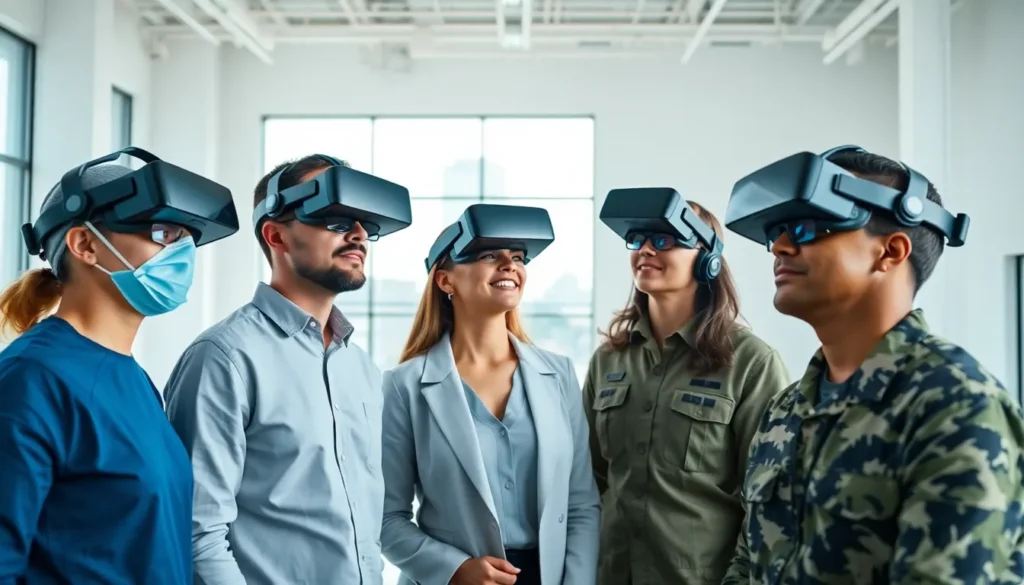
Virtual reality examples are everywhere in 2025. From surgeons practicing complex procedures to soldiers training for combat scenarios, VR technology has moved far beyond gaming consoles and science fiction movies. The global VR market is now worth over $30 billion, and that number keeps climbing.
What makes virtual reality so powerful? It creates immersive environments where users can learn, practice, and experience situations that would be impossible, expensive, or dangerous in real life. A medical student can perform a virtual surgery. An architect can walk through a building that doesn’t exist yet. A pilot can crash a plane, and learn from the mistake, without any real-world consequences.
This article explores virtual reality examples across six major industries. Each section highlights how organizations use VR to solve real problems, reduce costs, and improve outcomes. Whether someone works in healthcare, education, real estate, or defense, understanding these virtual reality examples reveals where the technology is heading next.
Table of Contents
ToggleKey Takeaways
- Virtual reality examples span six major industries in 2025, including gaming, healthcare, education, real estate, and military defense.
- VR-trained surgeons perform 230% better than those using traditional methods, making healthcare one of the most impactful applications.
- Walmart trained over one million employees with VR simulations, achieving 10-15% higher knowledge retention than conventional training.
- Real estate listings with virtual tours receive 87% more views, helping properties sell faster through remote property exploration.
- Military organizations use virtual reality examples to reduce training costs by billions while improving combat readiness without real-world risks.
- VR transforms passive consumers into active participants, creating immersive experiences for learning, treatment, and entertainment.
Gaming and Entertainment
Gaming remains the most visible category of virtual reality examples. Companies like Meta, Sony, and HTC sell millions of VR headsets each year to consumers hungry for immersive experiences. Games like Beat Saber, Half-Life: Alyx, and Resident Evil 4 VR have demonstrated that virtual reality can deliver entertainment experiences impossible on traditional screens.
The gaming industry generated approximately $12 billion in VR revenue in 2024. Players don’t just watch action unfold, they participate in it. They duck behind cover, reach out to grab objects, and physically move through digital spaces. This level of engagement creates emotional responses that flat screens simply cannot match.
But virtual reality examples in entertainment extend beyond games. Live concerts now happen in VR, with artists like The Weeknd and Jean-Michel Jarre performing for global audiences in virtual venues. Sports leagues stream games in VR, letting fans experience courtside seats from their living rooms. Theme parks use VR to enhance roller coasters and create hybrid physical-digital attractions.
Netflix and other streaming platforms are experimenting with VR cinema experiences. Users can watch movies in virtual theaters, complete with massive screens and the feeling of sitting in a darkened room. Social VR platforms like VRChat and Rec Room have millions of active users who gather, play games, and build communities in virtual spaces.
These virtual reality examples show how VR transforms passive viewers into active participants. Entertainment becomes something people do rather than something they consume.
Healthcare and Medical Training
Healthcare offers some of the most impactful virtual reality examples today. Medical schools now use VR to train surgeons, nurses, and emergency responders in controlled, repeatable environments. Students can practice procedures dozens of times before touching a real patient.
Stanford Medicine uses virtual reality to train surgeons on complex brain operations. The technology lets doctors rehearse specific procedures using patient scan data. They can identify potential complications before entering the operating room. Studies show that surgeons who train with VR perform 230% better than those trained with traditional methods.
Virtual reality examples in healthcare also include patient treatment. Therapists use VR to treat phobias, PTSD, and anxiety disorders through controlled exposure therapy. A patient afraid of heights can gradually confront that fear in a safe virtual environment. Veterans with PTSD can process traumatic memories with clinical support.
Pain management represents another promising application. Burn victims at Cedars-Sinai Medical Center use VR during wound care, reducing their pain perception by up to 50%. The immersive experience distracts the brain and changes how it processes pain signals.
Physical rehabilitation programs use VR to make exercises engaging. Stroke patients practice movements in virtual games rather than repetitive clinical exercises. The gamification increases patient compliance and speeds recovery times.
These virtual reality examples demonstrate VR’s potential to improve training, treatment, and patient outcomes across the healthcare industry.
Education and Virtual Classrooms
Education has embraced virtual reality examples at every level, from elementary schools to corporate training programs. VR allows students to experience subjects rather than just read about them. A history class can walk through ancient Rome. A biology class can shrink down and explore a human cell.
Google Expeditions, now integrated into Google Arts & Culture, has taken millions of students on virtual field trips. Schools in rural areas can visit the Louvre, explore the International Space Station, or jump into the Great Barrier Reef, all without leaving the classroom.
Universities use virtual reality for subjects that require hands-on experience. Engineering students at Arizona State University practice assembling jet engines in VR. Chemistry students conduct experiments with hazardous materials safely. Architecture students walk through their designs before construction begins.
Corporate training programs have adopted VR at scale. Walmart trained over one million employees using virtual reality simulations. Workers practice Black Friday crowd management, customer service scenarios, and emergency responses. The company reports that VR training improves knowledge retention by 10-15% compared to traditional methods.
Virtual reality examples in education address a fundamental learning principle: people remember experiences better than information. Reading about the Apollo 11 mission is one thing. Standing on the moon and looking back at Earth creates a memory that lasts.
Language learning apps now offer VR conversation practice. Users can order food at a virtual French café or negotiate prices at a virtual Tokyo market. The immersive context accelerates language acquisition far beyond flashcards or textbooks.
Real Estate and Architecture
Real estate and architecture provide practical virtual reality examples that save time and money. Buyers can tour properties across the country without booking flights. Architects can identify design problems before construction crews break ground.
Matterport and similar platforms create 3D virtual tours of properties. Buyers explore homes at their own pace, examining details from any angle. Real estate agents report that listings with virtual tours receive 87% more views than those without. Properties sell faster when buyers can preview them remotely.
Virtual reality examples in commercial real estate are even more compelling. A company considering a new headquarters can tour multiple buildings in different cities within a single afternoon. Decision-makers experience spaces rather than reviewing floor plans and photos.
Architects use VR throughout the design process. Clients walk through buildings that exist only as digital models. They can request changes before any materials are ordered. This approach catches design issues early, when fixes cost nothing compared to construction-phase modifications.
Interior designers show clients furniture arrangements, color schemes, and lighting options in VR. Homeowners make confident decisions because they experience proposals rather than imagining them from samples and swatches.
Urban planners use virtual reality to present development projects to community stakeholders. Residents can see how a proposed building affects sightlines, shadows, and neighborhood character. This transparency improves public engagement and reduces opposition to projects.
These virtual reality examples show how VR bridges the gap between imagination and reality in property development.
Military and Defense Training
Military organizations invest heavily in virtual reality examples for training purposes. Combat simulation has always been essential to military readiness, and VR makes it more realistic, accessible, and cost-effective.
The U.S. Army uses VR to train soldiers for urban combat, vehicle operation, and medical emergencies. The Synthetic Training Environment (STE) program connects soldiers across multiple locations in shared virtual battlefields. Units can practice coordinated operations without deploying to training grounds.
Flight simulation represents one of the oldest virtual reality examples in defense. Modern VR takes this further. Pilots can train in any aircraft type, practice emergency procedures, and experience combat scenarios, all without risking multi-million dollar equipment. The Air Force estimates that VR training saves billions in fuel, maintenance, and aircraft wear.
Navy personnel use VR for ship handling, damage control, and firefighting training. Sailors practice responding to flooding, fires, and combat damage in virtual ship compartments. They can make mistakes and learn from them without actual danger.
Special operations forces use VR to rehearse specific missions. Teams can practice building entries using 3D models of actual target locations. They coordinate movements, identify potential problems, and refine tactics before real operations.
Military medics train with VR simulations that present realistic combat casualties. They practice triage, wound treatment, and evacuation procedures under virtual stress. The training builds skills that save lives on actual battlefields.
These virtual reality examples demonstrate how VR enhances military readiness while reducing costs and risks associated with live training exercises.


