
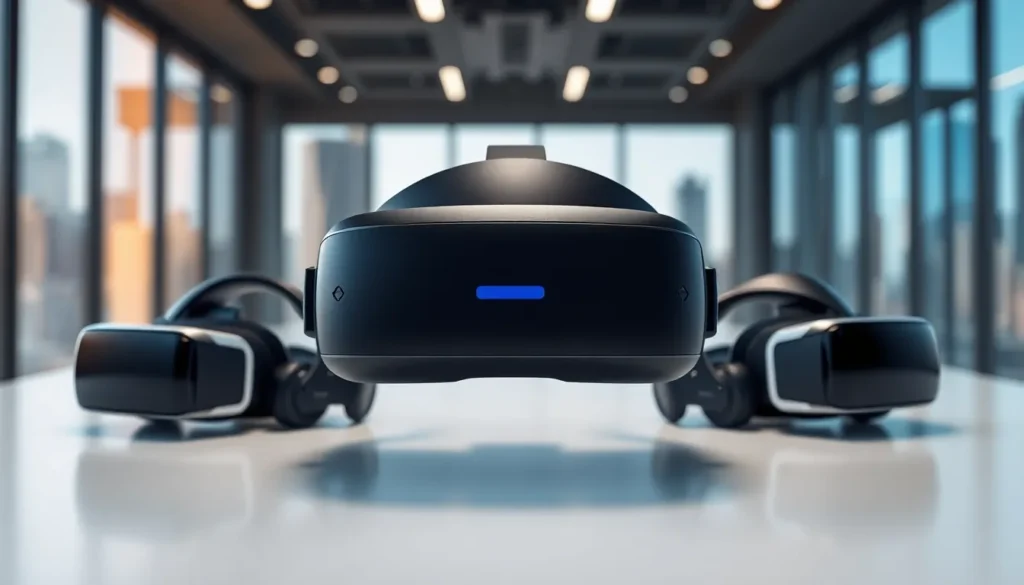
Finding the best virtual reality headset in 2025 requires matching your budget, use case, and technical expectations. The VR market has matured significantly, offering options from affordable standalone devices to high-end PC-tethered systems. This guide breaks down the top VR headsets available today, covering gaming-focused models, budget picks, and premium options for serious enthusiasts. Whether someone wants immersive gaming, fitness applications, or productivity tools, the right headset exists at the right price point.
Table of Contents
ToggleKey Takeaways
- The best virtual reality headset depends on your budget, use case, and whether you prefer standalone or PC-tethered performance.
- Meta Quest 3 offers the best flexibility for most users, combining standalone functionality with optional PC connectivity at $499.
- Budget-friendly options like the Meta Quest 3S ($299) deliver modern VR hardware without sacrificing quality for first-time users.
- Display resolution of at least 2K per eye and 90Hz+ refresh rates help reduce motion sickness and improve visual clarity.
- Premium headsets like the Bigscreen Beyond and Pimax Crystal provide the best virtual reality experiences for enthusiasts willing to invest $1000+.
- Comfort and weight distribution matter significantly for extended VR sessions—look for adjustable straps and balanced designs.
What to Look for in a VR Headset
Choosing the best virtual reality headset starts with understanding a few key specifications.
Display Resolution and Refresh Rate
Higher resolution reduces the “screen door effect” where users see visible pixels. Most quality VR headsets in 2025 offer at least 2K per eye. Refresh rates of 90Hz or higher provide smoother visuals and reduce motion sickness for many users.
Tracking Technology
Inside-out tracking uses cameras on the headset itself. This setup requires no external sensors and works well for most applications. Outside-in tracking with base stations offers more precision but adds cost and complexity.
Standalone vs. PC-Tethered
Standalone headsets like the Meta Quest 3 run independently without a PC. They offer convenience and portability. PC-tethered headsets require a powerful computer but deliver better graphics and processing power. Some headsets support both modes.
Comfort and Build Quality
Weight distribution matters for extended sessions. A headset that feels fine for 20 minutes might cause neck strain after an hour. Look for adjustable straps, face gasket options, and balanced designs.
Controller Design
Most VR headsets include motion controllers with haptic feedback. Hand tracking without controllers is becoming more common and works surprisingly well for casual applications. Gaming typically still benefits from physical controllers.
Price vs. Value
The best virtual reality experience doesn’t always come from the most expensive headset. Consider what features actually matter for intended use cases before overspending on specs that won’t get used.
Top VR Headsets for Gaming
Gaming remains the primary driver of VR headset sales, and several models stand out in 2025.
Meta Quest 3
The Meta Quest 3 dominates the gaming VR market for good reason. It offers standalone functionality with optional PC connectivity via Link cable or Air Link. The mixed reality passthrough cameras enable augmented reality experiences too. At $499 for the 128GB version, it hits a sweet spot between price and performance.
PlayStation VR2
Sony’s PSVR2 delivers excellent gaming VR for PlayStation 5 owners. The OLED displays provide deep blacks and vibrant colors. Eye tracking enables foveated rendering, which improves performance by focusing processing power where the user looks. The Sense controllers offer impressive haptic feedback. But, it requires a PS5 console.
Valve Index
The Valve Index remains a strong choice for PC VR gaming even though being an older design. Its 144Hz refresh rate feels incredibly smooth. The finger-tracking controllers set a standard others still chase. The base station tracking system provides excellent precision for room-scale experiences. It costs around $999 for the full kit.
Meta Quest 3S
Meta released the Quest 3S as a lower-cost alternative to the Quest 3. It uses the same processor but with a slightly lower-resolution display. At $299, it represents one of the best virtual reality entry points for gamers on a budget.
Each gaming VR headset excels in different scenarios. PlayStation fans benefit from the PSVR2’s exclusive titles. PC gamers with high-end rigs get the most from the Valve Index. The Quest 3 offers the most flexibility for users who want both standalone and PC experiences.
Best Budget-Friendly VR Options
Not everyone needs to spend $500 or more on virtual reality. Several affordable options deliver genuine VR experiences.
Meta Quest 2
The Quest 2 still works well even though being superseded by newer models. Prices have dropped significantly, making it an attractive entry point. It runs the same app library as the Quest 3 and handles most VR games adequately. Users can find refurbished units for under $200.
Meta Quest 3S
At $299, the Quest 3S provides modern VR hardware at budget pricing. It uses the Snapdragon XR2 Gen 2 processor, matching the flagship Quest 3. The display resolution is lower but still delivers a clear image. For first-time VR users, this represents excellent value.
Pico 4
The Pico 4 competes directly with Meta’s offerings outside the US market. It features a pancake lens design that reduces weight and improves clarity. The app library is smaller than Meta’s but growing steadily. Pricing sits around $300-400 depending on the region.
Used and Refurbished Options
Buying a used VR headset can stretch a budget further. The original Quest, Quest 2, and even PSVR1 offer genuine virtual reality experiences at significantly reduced prices. Check battery health and lens condition before purchasing secondhand units.
Budget VR has improved dramatically. The best virtual reality experiences no longer require spending over $1000. A $300 headset today outperforms flagship models from just a few years ago.
Premium VR Headsets for Enthusiasts
Serious VR enthusiasts and professionals often want the best possible experience, regardless of price.
Bigscreen Beyond
The Bigscreen Beyond weighs just 127 grams, making it the lightest PC VR headset available. It uses custom-fitted face cushions based on 3D face scans. The OLED micro-displays deliver sharp visuals with excellent contrast. It costs around $999 for the headset alone, plus controllers and base stations if needed.
Pimax Crystal
The Pimax Crystal pushes resolution boundaries with its swappable lens system. Users can choose between standard lenses for a wider field of view or QLED lenses for maximum clarity. The display reaches up to 42 pixels per degree, reducing the screen door effect almost entirely. Pricing starts around $1599.
Apple Vision Pro
Apple’s entry into spatial computing arrived at $3499. The Vision Pro offers the highest-resolution displays in any headset. Its mixed reality capabilities blend virtual elements with the real world seamlessly. But, the gaming library remains limited compared to established VR platforms. It functions more as a productivity and media consumption device.
Varjo Aero
The Varjo Aero targets professional and simulation users. Its bionic display technology delivers human-eye resolution in the center of vision. Professional pilots, designers, and engineers use Varjo headsets for training and visualization. Consumer pricing sits around $1990.
Premium VR headsets offer meaningful upgrades in clarity, comfort, and features. The best virtual reality experiences come from these devices when users value quality over cost savings.


